

This year, Silverchair had a presence at a variety of meetings that each offered something different. Here's what we heard, what we saw, and what's stayed with us.
NISO Plus: Metadata & Everything Underneath It
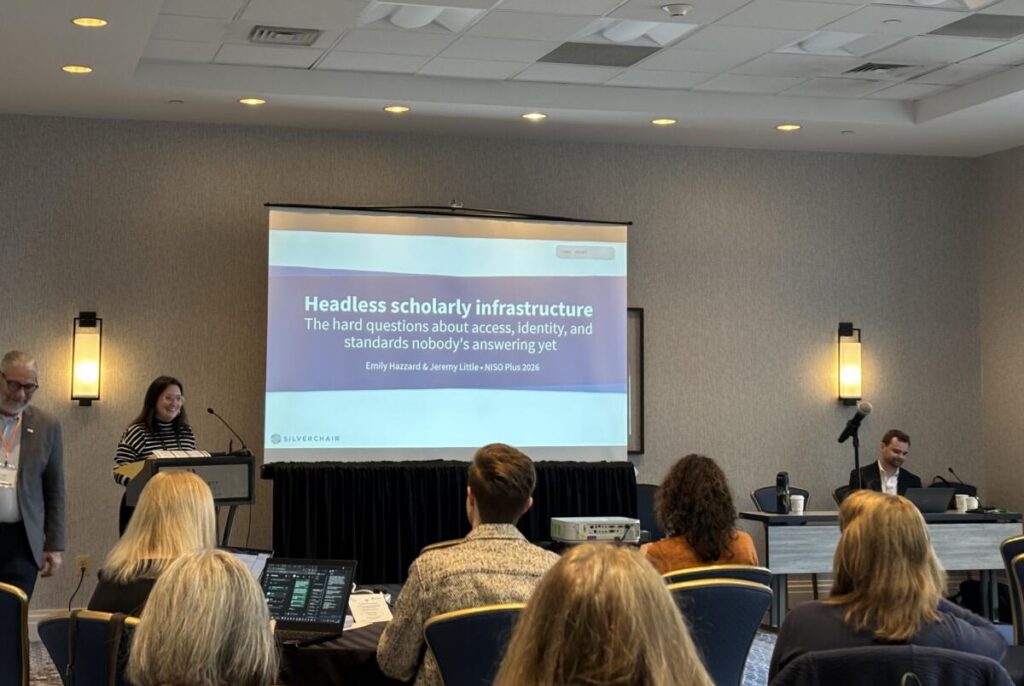
NISO Plus continues to be one of the most substantively rich events of the year, and 2026 was no exception. Josh Dahl (SVP, Product) moderated a panel called "The Metadata Imperative," one of four sessions at the conference focused on metadata, though Josh noted that the operational angle of their session provided meaningful differentiation from the others. The through-line across almost everything at the conference, he observed, was a familiar problem: fragmented systems, lossy hand-offs between platforms, and no clear owner for the full metadata journey. That framing — of metadata as an ecosystem-wide infrastructure problem, not a data entry problem — came up repeatedly, and it's one the industry is still working hard to name correctly, let alone solve.Emily Hazzard (Product Manager) and Jeremy Little (VP, AI Engineering) led a session on headless infrastructure drew strong audience engagement, opening with a leveling exercise on current platform approaches before moving into tabletop discussions that generated some of the most animated conversation of the event.
Data Systems Business Analyst Kirsten Fuoti attended several sessions that mapped directly to questions we're tracking closely. One, on provisioning access for AI systems, surfaced a tension that's become almost definitional for our moment: scholarly publishing infrastructure was built for human readers over the past thirty years, and AI agents are arriving now, at scale, and largely without the protocols that human-facing systems were designed to enforce. Another session looked at usage tracking in the age of AI, where zero-click search is eroding publisher visibility in ways that traditional metrics can't capture. When users receive answers from AI tools without returning to source platforms, that usage goes untracked and uncredited. COUNTER is actively responding and Kirsten is part of their working group.
Emily put the spirit of NISO Plus well:
"NISO Plus continues to be my favorite conference of the year due to its focus on learning, sharing knowledge and insights, and industry collaboration. It's both refreshing to attend a conference that's not sales-focused and a good reminder to the industry that we're here to work on our shared mission.”
Researcher to Reader: Peer Review and the Persistent Motivation Problem
Matt Smith (Senior Account Manager) and I represented Silverchair at Researcher to Reader, which we both agree is genuinely distinctive in the UK conference landscape for the way it brings together researchers, publishers, librarians, and vendors in practical conversation rather than parallel tracks. One of the breakout workshops Matt attended focused on peer review — specifically, the challenge of getting reviewers to commit and follow through. The session organized the problem around a familiar split: monetary incentives versus non-monetary ones, such as prestige and recognition. What stood out to Matt was hearing directly from academics in the room that peer review activity counts for nothing in tenure decisions and that institutions often prefer their researchers focus on research rather than service activities like reviewing. It's a structural misalignment the industry has been circling for years, and hearing it stated plainly by people living it is a useful grounding.The workshop I attended centered around community engagement. We discussed practical ways of engaging our communities and came away with real ideas and even a next steps list of actions. It was engaging and collaborative, and everyone found it extremely interesting.
London Book Fair & Forum Connect
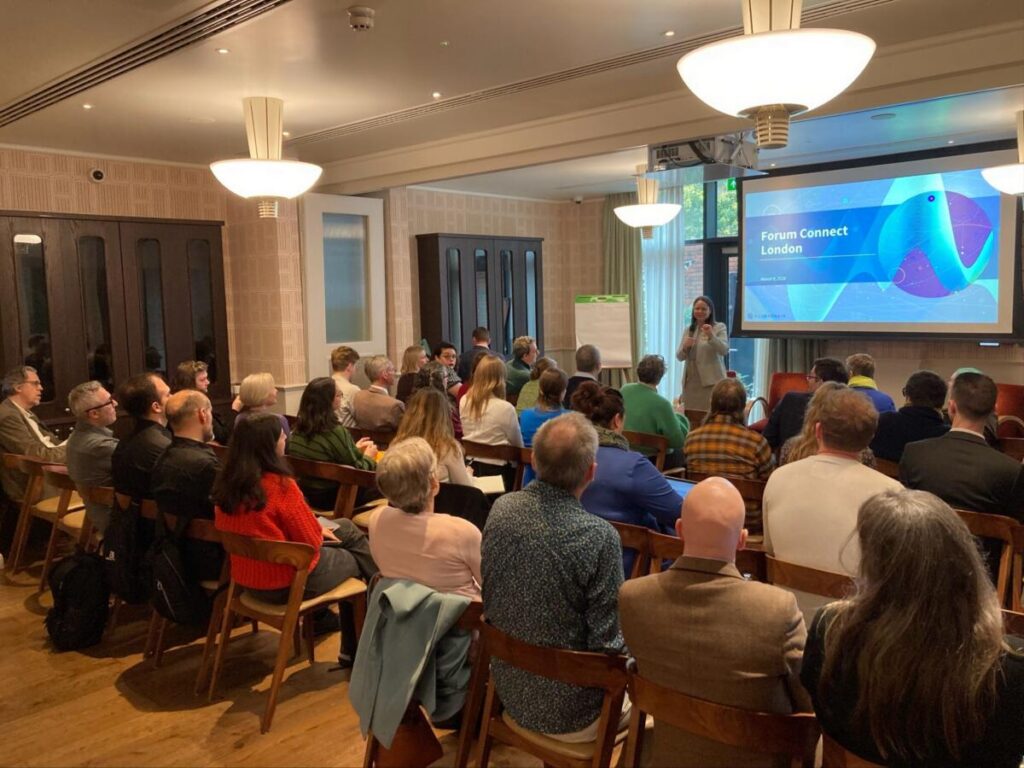
London Book Fair was buzzing in a way that felt genuinely energized. The Tech Theatre drew consistent crowds. A session I attended offered a preview of a survey currently in progress on the future of journal publishing. It was one of those sessions that surfaces the questions the industry is quietly asking but hasn't yet found the right language to answer publicly.Our recently released Discovery Bridge MCP came up consistently, with genuine curiosity from partners and clients about what Silverchair is doing and how it could work for them. It was gratifying to be able to speak concretely to the solutions we're building. Senior Account Manager Rebecca Hatjoullis put it clearly:
"LBF remains an essential fixture on our calendar for building regional presence and engagement, creating space for peer-to-peer discussions, and showing up to hear directly from our customer base."(Read my colleague Sara Bowler’s summary of our adjacent client event here.)
UKSG: A Window Into Library-Side Concerns
UKSG sits a bit outside our core community, but that's part of what makes it valuable. As Matt Smith put it:"This conference highlights where revenue within our clients' organizations is at risk, and where there are opportunities to respond to librarian buyer concerns with the right toolset."This year, research integrity was the dominant theme on that front.
ALPSP University Press Redux
I also attended the ALPSP Redux event, which has a coziness to it that I appreciate. It's the kind of conference where you can have real conversations. One session that stuck with me featured three university presses (Policy Press/Bristol University Press, LSE Press, and University of Westminster Press), each sharing their current situation, challenges, and thinking about the future. Hearing how differently institutions of varying sizes approach independence, sustainability, and growth was illuminating. 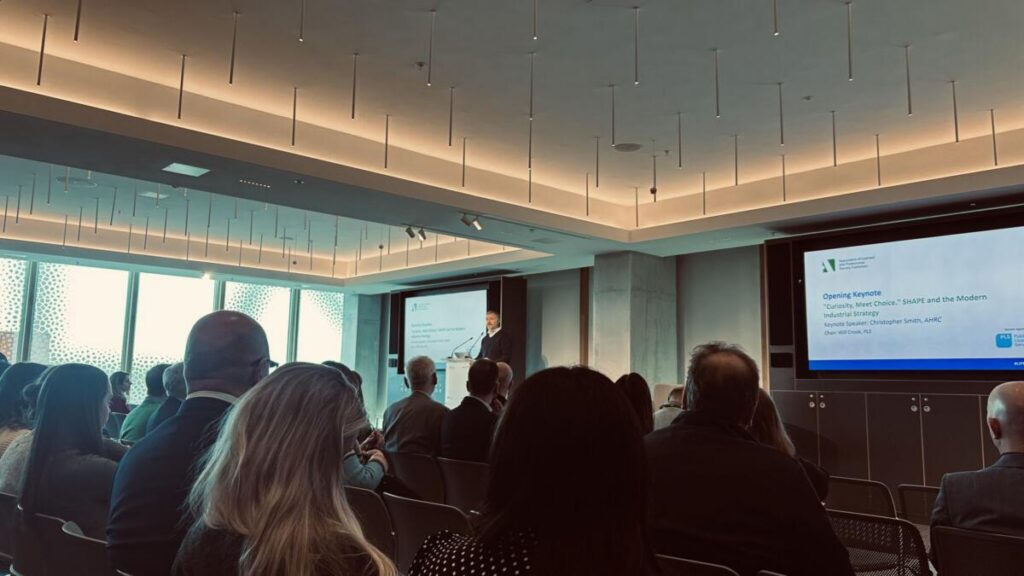
STM US Annual Meeting
Most recently, our team attended the STM US conference in DC, and though the sessions were conducted under Chatham House rules, there were some clear themes that arose. My colleague Scott Bouchard (Director of Business Development) noted the pressing concern of AI that operates quietly in the background, deployed at scale, sorting and ranking without disclosure or accountability. Transparency emerged as a through-line across sessions — not as a vague principle but as a practical challenge. The field is moving from asking whether AI was used to understanding how, but the mechanisms for disclosure and trust-building are still being worked out.The submission integrity problem drew significant discussion as well. The scale of fraudulent and AI-generated submissions has made it a genuine operational challenge, and the consensus was that neither humans nor AI alone are adequate.
For Hannah Heckner Swain (VP of Strategic Partnerships), the STM 2030 trends session offered a longer lens on these themes. Collaboration is facing real geopolitical headwinds, legacy technology was described as "space debris," and the fundamental nature of knowledge production is shifting. But rather than being fatalistic, the framing included the Sagittarius constellation, associated with knowledge, truth, adventure, and wonder, waiting on the other side of the current turbulence if the industry can navigate past infrastructure collapse and the pull of the singularity. There's fear in the room, certainly, but also a recognition that scholarly publishing holds something the world genuinely needs right now — and that peer review as organized skepticism may be one of the more valuable things our industry produces.
What's Next
We head into the back half of spring with momentum. CSE is coming up in Durham, where Josh Dahl will be presenting, and later in the season Hannah Heckner Swain will represent Silverchair at the World Congress on Research Integrity in Vancouver. Both events matter to different parts of the communities we serve, and we're glad to be at the table for both. As usual, SSP will round out the Spring events—watch for our preview blog in the coming weeks!Spring conference season is always a useful time of recalibration, hearing what the industry is actually worrying about, testing our own thinking against the room, and returning home with a clearer sense of where the work needs to go. This year gave us plenty to work with.
Interested in connecting with our team at an upcoming event? Reach out — we'd love to continue the conversation.