

Here's a look back at how the day unfolded and why it's already got us looking forward to next year!
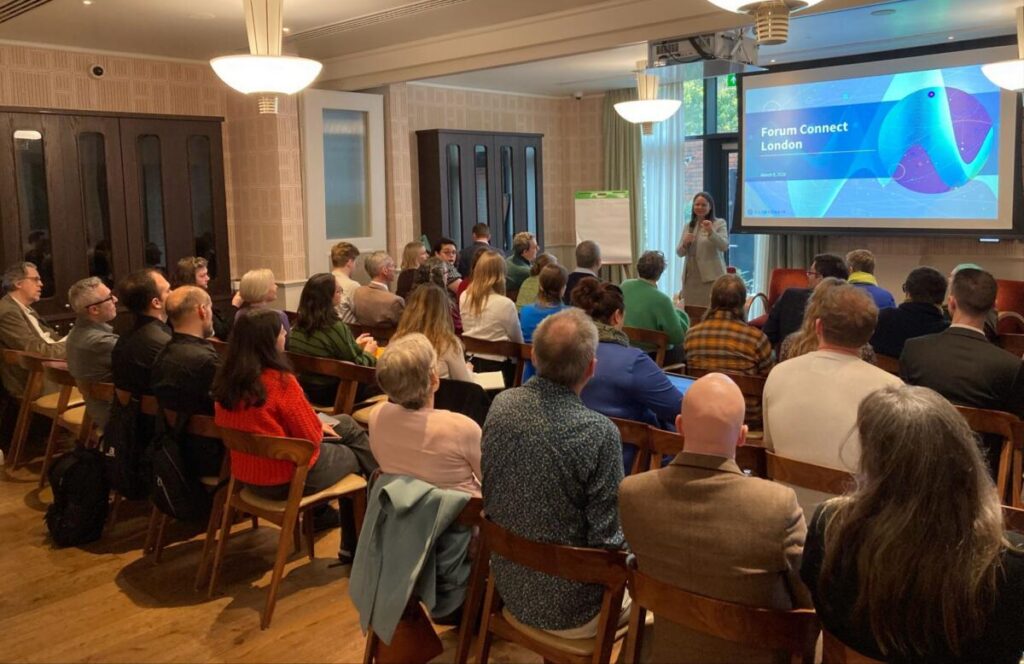
The Silverchair team opened with a look back at the past year and a clear-eyed preview of what's ahead. With Silverchair's product portfolio spanning from submission and peer review through to hosting, discovery, and impact, the session set the stage for the conversations that followed: ambitious, grounded, and firmly focused on what publishers actually need right now.
"Love these events, great opportunity to deep dive into a system and see what's coming."—Kim Eggleton, Head of Research Integrity and Peer Review, IOP Publishing
AI Disruption & Opportunities
The morning's centerpiece was a panel discussion featuring industry technology leaders, and it did not disappoint. Facilitated by Jeremy Little, Silverchair’s VP of AI, the panel included Ian Mulvany (BMJ), Kim Eggleton (IOP Publishing), and Julia McDonnell (OUP). In a fast-moving, frank format, the conversation ranged from the practical to the philosophical. It touched on questions that no one in the room had fully resolved yet. Which, as one panelist observed, was rather the point.A recurring theme was the gap between experimentation and production. Several panelists noted that running pilots is easy; knowing when and how to move something into live, scaled use is much harder. Accuracy came up time and again as the non-negotiable prerequisite, particularly for anything editorially critical. But accuracy alone isn't enough. Tools also need to be scalable, integrable into existing workflows, and something that teams can confidently explain and train their users on. As one panelist discussed, there is a huge range of opinion about AI among researchers, editors, and reviewers, and navigating that human dimension is as important as getting the technology right.
The group wrestled thoughtfully with the build vs. buy question. When does it make sense to invest in a bespoke solution versus building on top of a foundation model? The honest answer, the panel agreed, depends entirely on the use case, the team's existing capabilities, and how tightly security and data sovereignty need to be controlled.
Perhaps the sharpest exchange of the morning centered on AI's impact on research integrity. With the economics of paper production shifting dramatically it was suggested that an early-career researcher today could theoretically submit dozens of AI-assisted papers to dozens of journals in a single week. The industry faces real pressure on identity systems, submission volume, and the reliability of peer review. But the panel was equally clear that this pressure creates opportunity. Rather than fearing that researchers are already using AI tools in ways publishers can't see or control, wouldn't it be better, one participant suggested, to develop trusted, secure tools that give reviewers a genuinely better experience than uploading manuscripts to an unsecured chatbot?
The session closed with a forward-looking question: what should we be asking this panel in two years? Three answers stood out:
- How has your workforce and its skills changed?
- How have you held to your strategic direction amid enormous noise?
- How have your revenue streams from licensing content evolved as AI training becomes part of the picture?
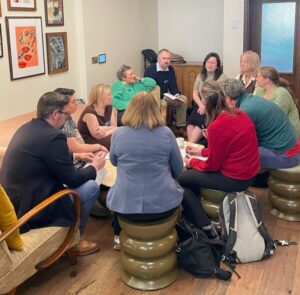
Roundtable Conversations
The mid-morning roundtable sessions gave attendees the chance to take the panel's themes and dig in at table level. These small-group discussions - harder to summarize but often where the most useful thinking happens - gave attendees from different publishers the chance to compare notes, share frustrations, and discover that many of them are navigating the same challenges from slightly different angles. The value of that cross-publisher perspective was palpable throughout the rest of the day.Product Breakouts: What We're Building and Why
After lunch, the group split into product streams for an afternoon of roadmap updates, prioritization exercises, and genuinely interactive discussion.ScholarOne Manuscripts
The ScholarOne product session opened with 2025 highlights and 2026 key initiatives — covering the roadmap, evolving ways of working including user testing and the accelerated team model, and a Q&A.
The first discovery session focused on the editor experience, centered around the theme of how the interface makes editors feel. After a brief group review of mockups, attendees split into table groups to collaboratively design their ideal editor interface — each group took a different mockup as a starting point, then pitched their vision back to the room. Topics driving the discussion included top priorities for editor engagement, the balance between editorial and admin control, and information hierarchy.
The second part of the session shifted to AI adoption, with the expressed goal of not to build solutions in search of problems, but to think carefully about where AI genuinely fits within ScholarOne. Participants worked through a structured prompt framework, articulating both today's and 2029's views on what AI should and should not do on a user's behalf. After individual reflection, table groups aligned on shared responses and presented them to the full room, with facilitated discussion pushing on the reasoning behind each position.
"I really enjoyed the event and really look forward to seeing Silverchair working on delivery of the roadmap. There are some really great things on there and I’m very encouraged to see the direction of travel. It is much appreciated to be part of the journey rather than given a list of new features with limited engagement."—Simon Smith-Smith, Head of Peer Review Systems Solutions, Taylor & Francis
The Silverchair Platform
The parallel Silverchair Platform session opened with an honest account of how the discovery landscape is shifting. Against that backdrop, the session walked through Silverchair's six interconnected product themes for 2026: AI-driven discovery, accessibility and SEO/GEO, monetization infrastructure, platform modernization, analytics, and publisher intelligence. The team emphasized that these aren't siloed workstreams - investment in one strengthens all the others.
Several upcoming developments drew particular interest. Discovery Bridge, Silverchair's new MCP (Model Context Protocol) solution, provides a standardized way for publisher content to be accessed directly through an authenticated LLM connection - giving publishers a way to be discoverable in AI environments without losing the ability to track and trust usage. Dynamic Discovery, an on-platform conversational AI experience, is actively rolling out to more publishers. And Fathom, Silverchair's new analytics solution, helps publishers understand how content is being used in a world where that question is getting harder to answer.
The afternoon's prioritization workshop produced a lively vote: attendees chose revenue and renewals as the analytics lens they most want to dig into, with traffic and trust a close second.
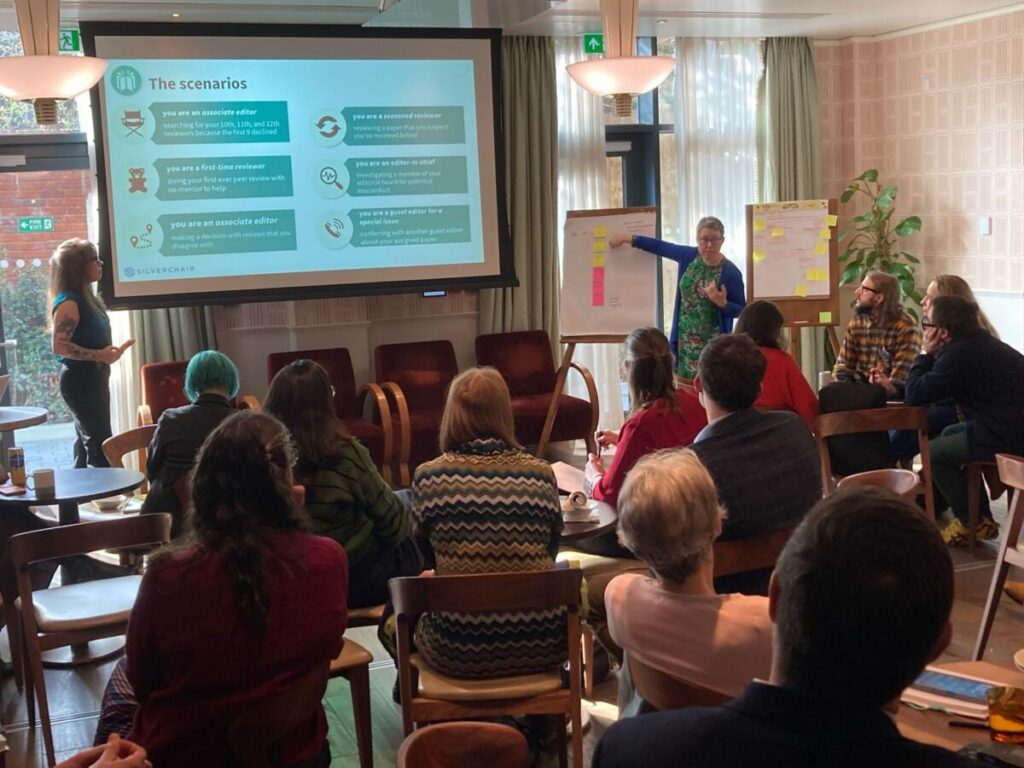
The second Silverchair Platform breakout session tackled AI's impact on platform infrastructure head-on. The session introduced three "nightmare scenarios" for group discussion.
- The Blind Spot: What happens when AI tools consume your content on behalf of researchers without those researchers ever visiting your platform?
- Trust Erosion: As AI tools serve content directly, publisher brand, editorial voice, and citation trails begin to dissolve.
- The Integration Treadmill: For smaller publishers especially, the pressure to integrate with an ever-expanding landscape of AI tools risks becoming an exhausting and expensive distraction.
Open Engagement & Networking
The day closed with an open "ask me anything" session with the Silverchair leadership team. Questions ranged from the very specific (reviewer and editor template management in ScholarOne; inclusion data collection; China and Asian market support) to the more expansive (what skills will matter most in this environment? What does an end-to-end ScholarOne-to-Platform workflow look like?). The Silverchair team's answers were characteristically direct and transparent.The question session gave way to a cocktail reception and the conversations kept going. There is something that no webinar, however well-run, can replicate: the serendipitous exchange between publishers who discover they're wrestling with the same problem from opposite ends, or the moment when a question raised in a breakout finds its answer over a glass of wine from someone at a completely different organization.
See You Next Year!
For those who couldn’t join us this time, we hope this gives a flavor of what took place, and a reason to attend another upcoming Silverchair event. The conversations we had were the kind that move things forward: honest about the challenges, energized about the opportunities, and grounded in the shared conviction that this community of publishers, platform partners, and the researchers we all ultimately serve, is better when it works together.Want to learn more about anything we discussed? Email your Account Manager or get in touch.