

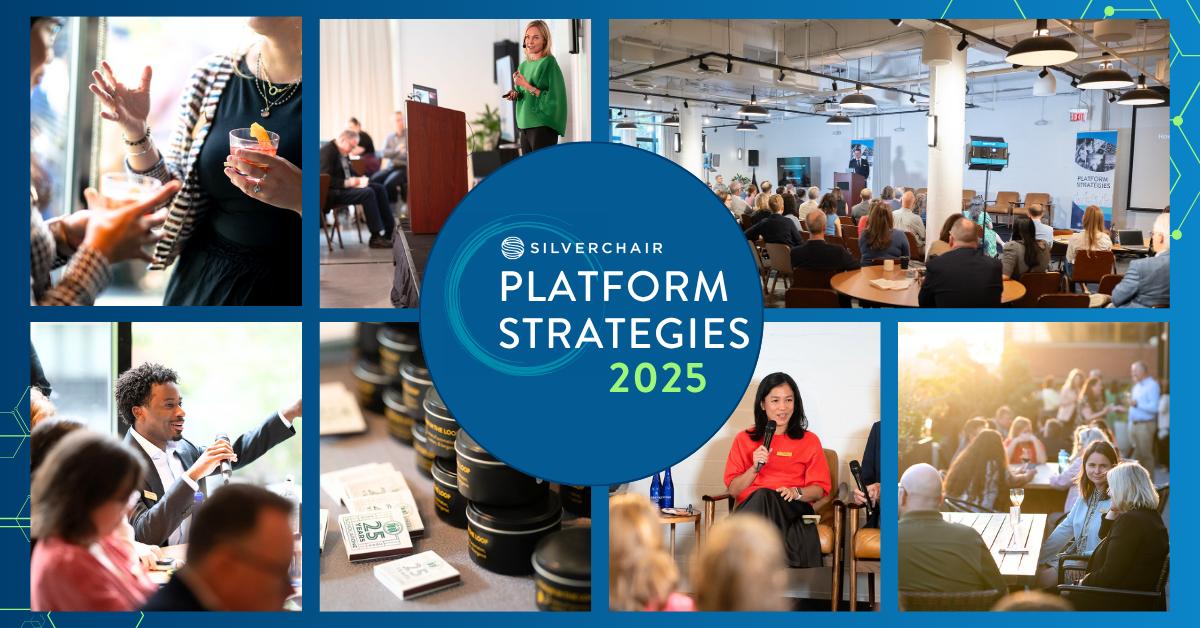
PLATFORM STRATEGIES 2025 attracted 170 thought leaders and decision-makers from across our industry for a day of engaging discussions and networking. The 2025 event centered around a theme of purposeful transformation. The future of our industry depends heavily on our ability to preserve and promote scientific advancement, and the platforms and technology we depend on play a pivotal role in that endeavor. We heard from researchers, technology leaders, publishers, and more on the biggest topics driving our platform strategy.
View the photo gallery here and watch the recordings of Platform Strategies 2025 and our Spring webinar series below.
Welcome Address & Opening Keynote
Read the recap here.
Between AI, OA, and other transformation disruptions, the future of academic publishing demands innovation, adaptability, and strategic partnerships. How do we evaluate and improve publisher and technology readiness as we navigate the evolving landscape of scientific publishing? Possible topics include: the burgeoning role of third-party integrations in bolstering research integrity; the potential of automation to streamline legacy processes; the impact of infrastructure that is connected and integrated; and strategies to unlock and leverage the valuable data within their peer review systems to inform decision-making.
Does the Mission Matter? Strategic Frameworks for Balancing the ‘Why’ and the ‘How’ in Scholarly Publishing
Read the recap here.
The scholarly publishing industry, comprising both for-profit and nonprofit organizations, shares common missions that have endured for centuries but may need updating to reflect modern challenges like AI, policy changes, and emerging technologies. This session explores how mission guides product development, platform strategy, and technology partnerships while balancing the tension between mission fulfillment and business sustainability, including debates over open access economics and publishing quality versus quantity. The discussion focuses on how to leverage scholarly publishing’s core purpose to drive meaningful change without impeding growth and technological advancement.
Welcome to the Jungle – A Researcher’s Journey Through Existing Processes
Read the recap here.
The paths through the scholarly publishing lifecycle as a researcher can be complex, poorly marked, or just plain difficult. Join us for a discussion with researchers to hear about how they prioritize their projects, what tools they love and loathe, how they track the impact of their work, and what they consider to be the biggest roadblocks in their existing workflows. This conversation will touch on the value of the existing infrastructure, but will mainly be an opportunity to hear directly from researchers how they experience the industry’s widely accepted practices. Attendees can expect to leave the session with a better understanding of the thought-process, values and motivations behind researchers’ decisions.
How AI is Transforming Platform Strategy
AI is revolutionizing software development, with models becoming increasingly capable in domains like mathematics and programming, potentially leading to humans writing only a small fraction of code at progressive companies within five years. On publishing platforms, AI is transforming user experiences through enhanced workflows, discovery tools, and new capabilities, while also disrupting traditional traffic patterns as users rely on AI agents to search and synthesize research literature. This dual-sided AI transformation—affecting both platform development and user interaction—raises fundamental questions about the future positioning of scholarly publishing platforms.
The Global Battle to Regulate Technology
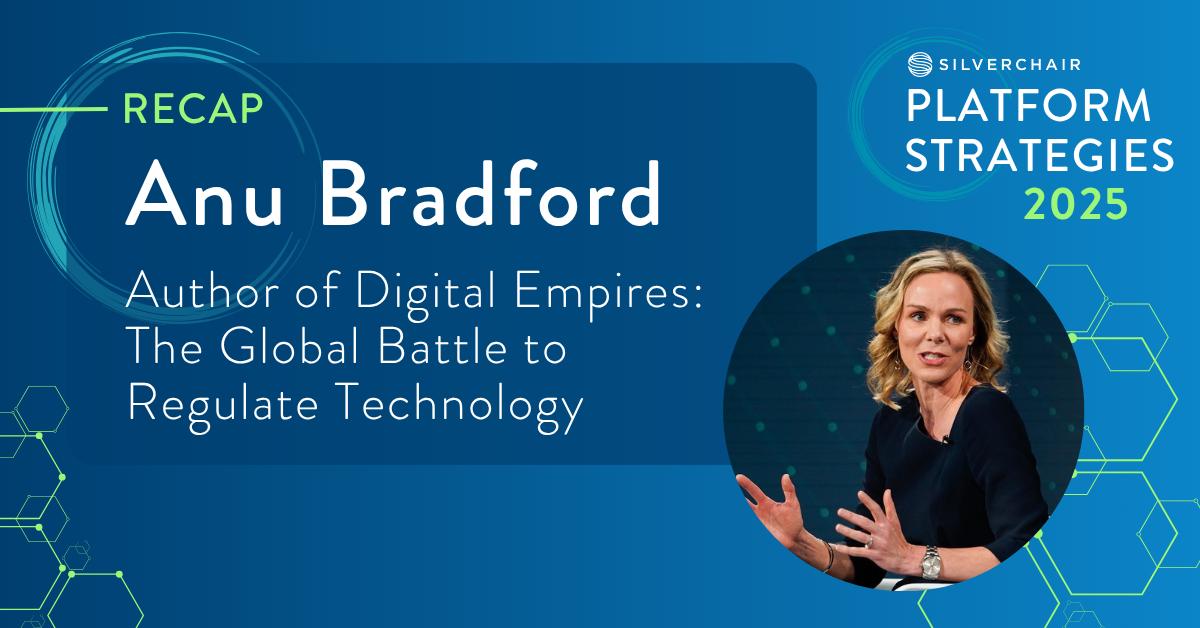
Anu Bradford, a professor at Columbia University and expert on digital regulation and the global economy, closed Platform Strategies 2025 with a keynote that reframed how we should understand the geopolitical stakes of AI governance. Rather than viewing regulation as a simple choice between innovation and constraint, Bradford outlined three competing regulatory models vying for global influence – and explained why the scholarly publishing community has more agency in shaping outcomes than it might assume.