



As an innovative experimentation space, the AI Lab is continuously ideating and prototyping possible solutions with our clients, giving them hands-on experience, and incorporating learnings as we go. In addition to our fully live offerings (like Dynamic Discovery), we’ve got a number of features and tools further along in the planning phase, which we’ve previewed below. Clients may reach out to their account manager to learn more and inquire about participating in the pilots.
Our approach
While some rush to deploy AI broadly, Silverchair is taking a measured, collaborative approach. With foundational LLMs advancing rapidly, we understand the legitimate concerns about AI in scholarly publishing, which is why we’re prioritizing responsible AI adoption through close collaboration that puts publishers firmly in the driver’s seat. Our strategy is to start small and focused, then rapidly iterate based on direct feedback from our clients. This ensures our AI solutions are shaped by the very communities they serve, creating tools that truly meet publisher needs while maintaining scholarly integrity.
Content Protection
Our approach also prioritizes publisher control of their data and content. In addition to maintaining the highest standards of privacy and security, we commit (in our published terms as well as in our contracts) that no content hosted on our platforms will be used in AI tools without explicit permission from our clients for internal development of AI tools and services, or for training or licensing of external AI services. We have designed all our initiatives with this exact concern in mind, to completely protect our publishers’ content. Silverchair only uses LLM APIs where there is a strong guarantee of data protection and that content will not be used for future LLM training. Additionally, Silverchair has rolled out features that enable publishers to make informed choices about which AI crawlers may or may not access their content, keeping the power of choice in our clients’ hands.

What’s percolating in the lab
Learn more and see mockups for each tool below.

Program Builder |
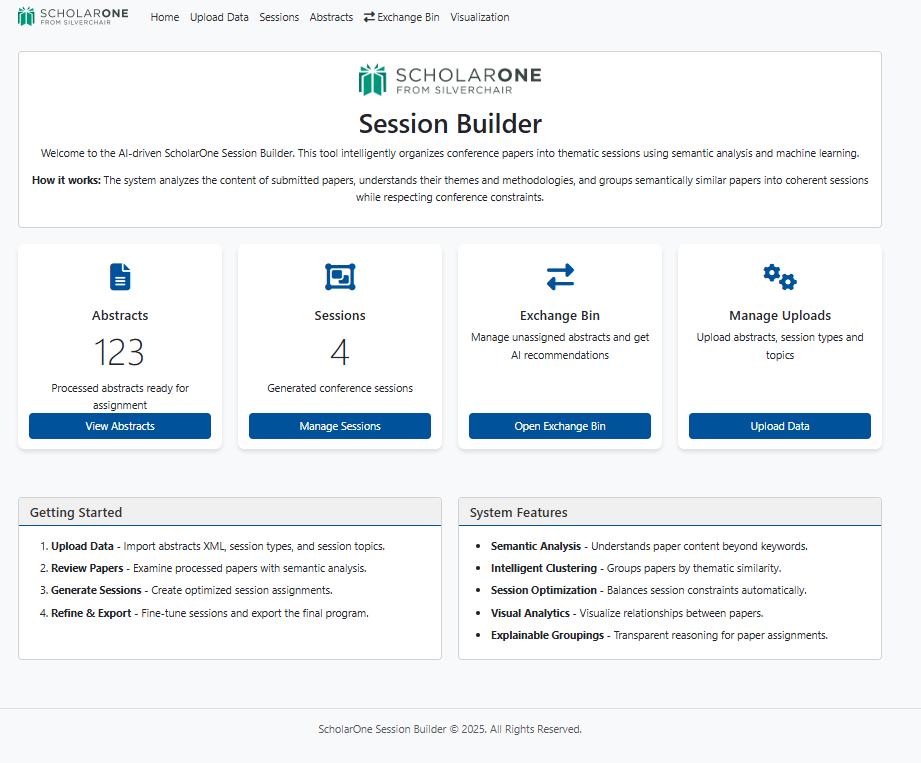
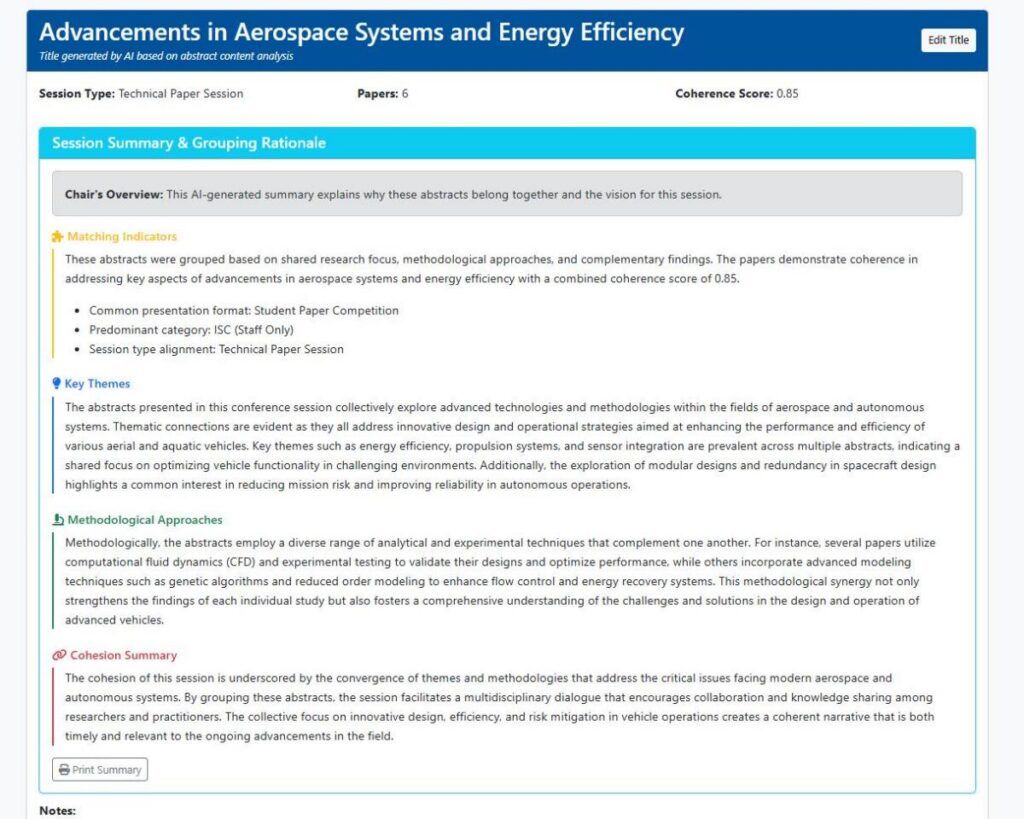
 Intelligently organize conference abstracts into thematic sessions, saving organizers time over manual filtering and grouping |
Reviewer Discovery |
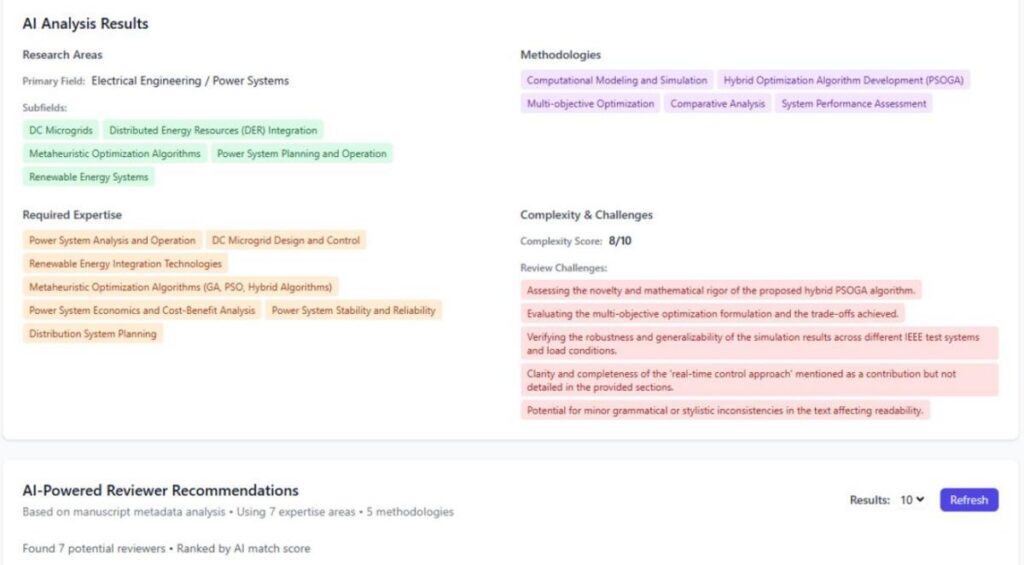
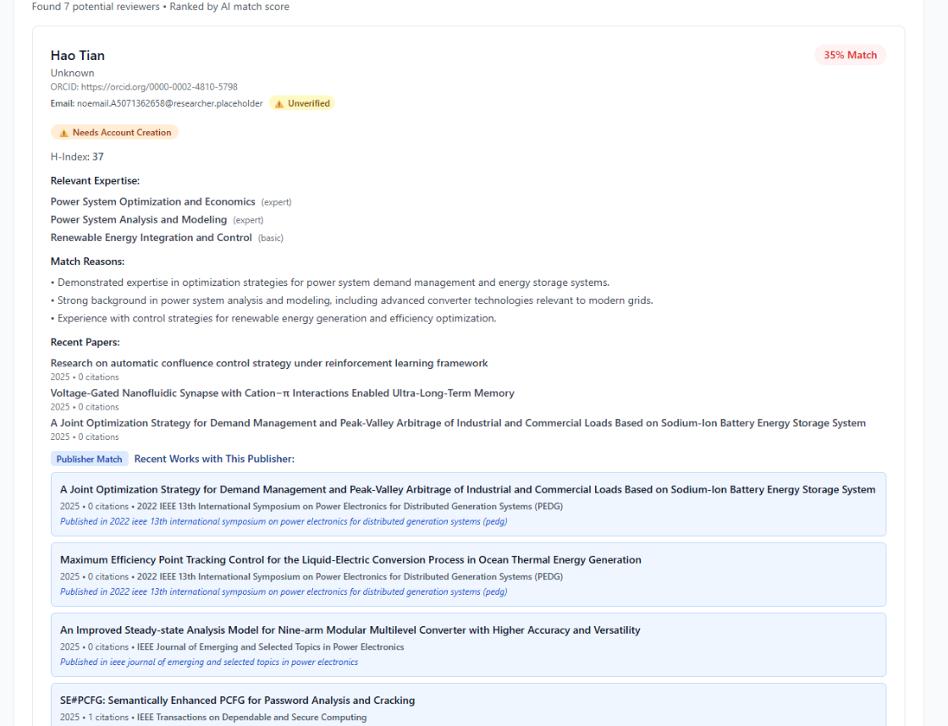
 AI-powered peer review orchestration that optimizes the reviewer selection process, reducing reviewer invitation cycles and improving review quality |

Article Intelligence |
 Article Intelligence brings AI experimentation directly to the article page through an intuitive sidebar widget. |
Citation Check |
Quickly verify citations and provide enhanced insights to empower editorial decision-making. |
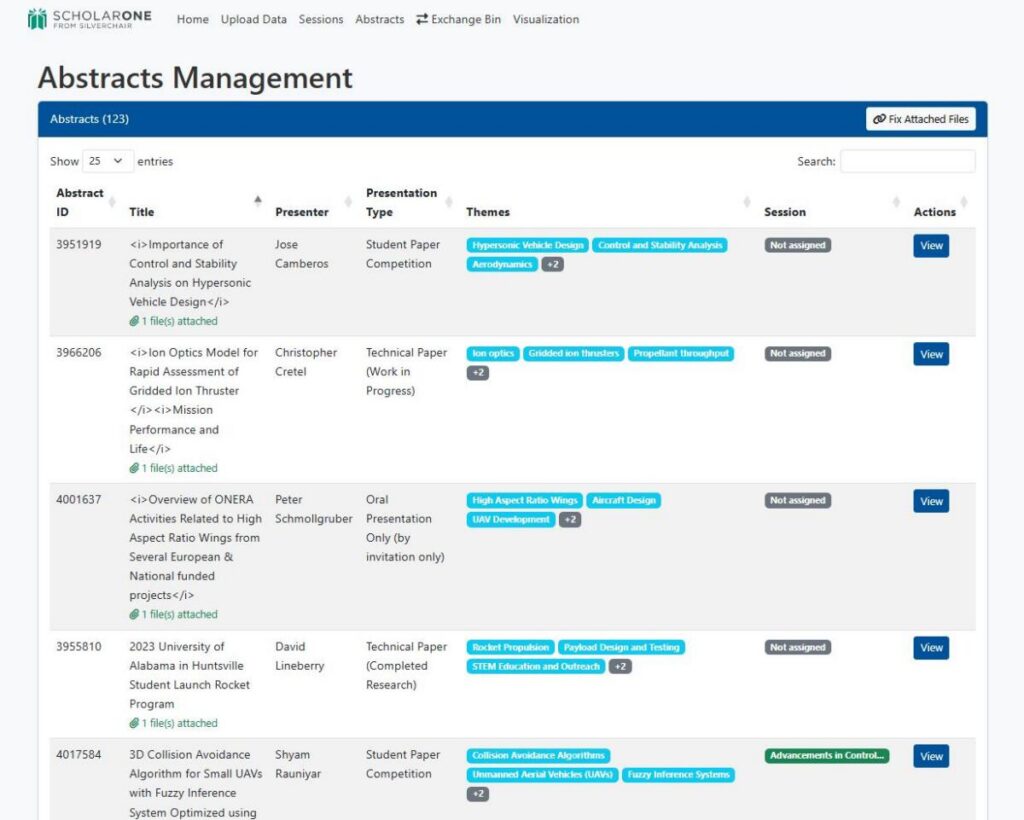
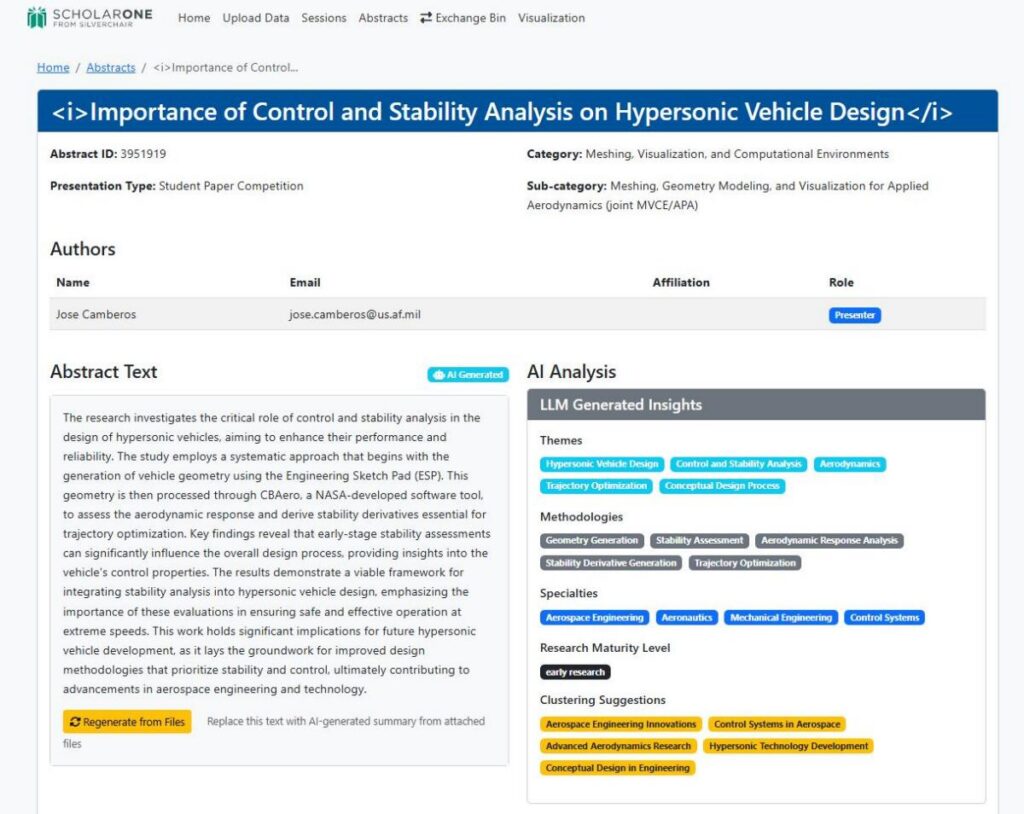
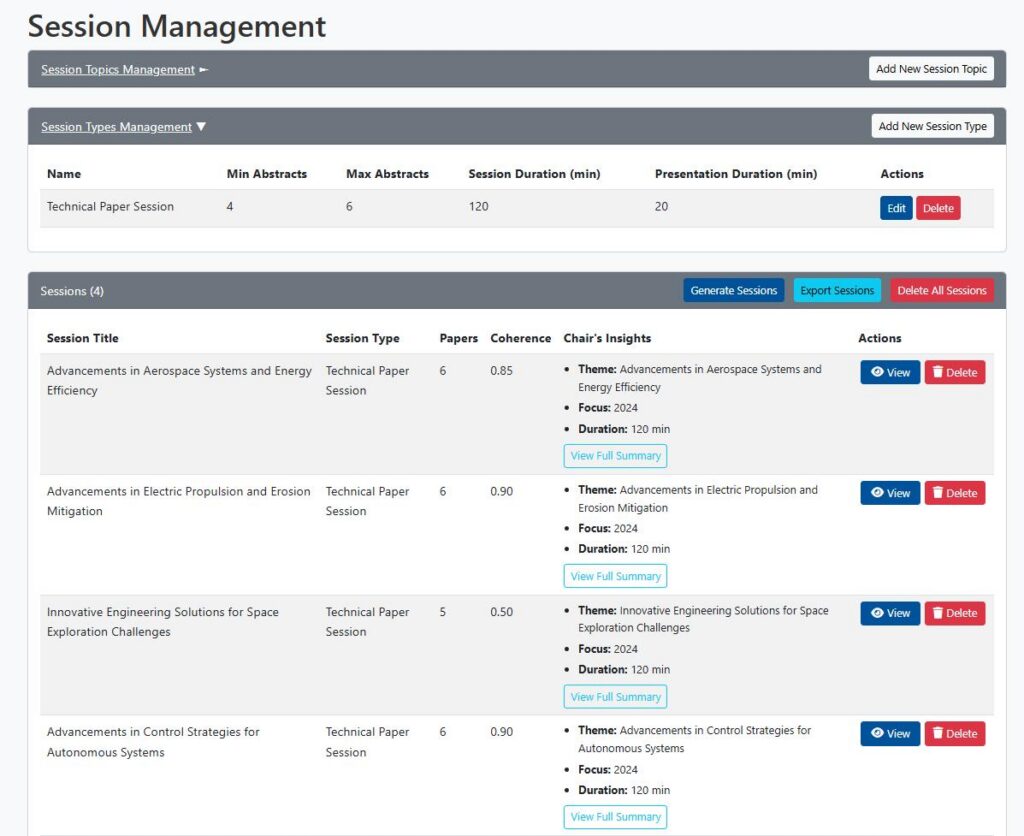
Building a conference program has always been one of the most labor-intensive responsibilities in academic society management — committee members sorting through hundreds of abstracts, often over multiple days, in a process that pulls VIPs away from their day jobs and still leaves room for human inconsistency. ScholarOne Conference’s Program Builder changes that calculus. Conference organizers submit their accepted abstracts and session parameters, and Program Builder uses semantic AI analysis to understand the full content of each submission — themes, methodologies, research focus — and automatically clusters them into coherent, well-structured sessions complete with generated titles and rationale. The result isn’t a finished program handed down from a black box; it’s a well-reasoned first draft that your program committee can react to, refine, and finalize, with the ability to reassign papers, adjust session order, and review confidence scores before exporting the structure directly into ScholarOne Conferences.
Key benefits
- Dramatically reduces the time between submission close and program publication, replacing days of manual committee sorting with a ready-to-review first draft
- Generates thematically coherent session groupings optimized against real constraints — session duration, abstract count limits, and presentation type
- Includes AI-generated rationale for every grouping so editors understand why papers were clustered together, not just how
- Flags outliers and provides confidence scores for each paper assignment, giving program chairs clear signals about where human review is most needed
- Exports directly into ScholarOne Conferences, eliminating redundant data entry and streamlining the path from submission close to published program
- Reduces travel and staff costs for societies that currently convene in-person program committees for large-scale annual meetings
Program Builder is currently available in beta. Contact your Account Manager to learn more about participating.
Finding the right reviewers — quickly, fairly, and without overburdening the same small pool of willing experts — is one of the most persistent friction points in editorial workflow. Reviewer Discovery brings a new level of intelligence to that process by drawing on ScholarOne Manuscript’s deep reservoir of historical engagement data alongside a broad set of external sources, including OpenAlex, Crossref, Semantic Scholar, and ORCID. For each manuscript, the tool performs semantic analysis to extract topics and research focus, then produces ranked reviewer recommendations that factor in expertise fit, recent activity, workload, historical acceptance rates, and conflict of interest checks. Every recommendation comes with transparent rationale and an audit trail, so editors aren’t just handed a list — they understand why each candidate was surfaced.
Key benefits
- Shortens the reviewer invitation cycle by surfacing candidates who are both well-matched to the manuscript and genuinely likely to respond
- Acceptance likelihood modeling accounts for reviewer workload and past engagement patterns, helping editors avoid repeatedly approaching overcommitted experts
- Supports reviewer health across the community by distributing invitations more equitably and reducing the risk of burnout
- Built-in conflict of interest checks, diversity criteria, and embargo policy controls handle compliance within the recommendation layer rather than as a separate editorial step
- Combines ScholarOne’s proprietary engagement history with public scholarly databases for a candidate pool that reflects both topical expertise and real-world availability
- Provides transparent rationale and an audit trail for every recommendation, giving editors confidence in the process and a clear record for editorial governance
Reviewer Discovery is currently in beta. Contact your Account Manager to learn more.
The scholarly publishing landscape is flooded with AI tools making bold promises, but implementation remains complicated and validation uncertain. Article Intelligence brings experimentation directly to your Silverchair Platform article page through an intuitive sidebar widget, giving publishers a practical path to test AI-powered features in real-world reading contexts before committing to full deployment.
Rather than asking you to evaluate AI capabilities in isolation, we’re building pilots that integrate naturally into the reader experience. Early features include AI-driven related content recommendations that transform discovery patterns and plain-language summaries that expand article accessibility—all accessible through a single, configurable interface on your platform. Publishers can activate tools in their staging environments to observe how readers interact with AI enhancements in authentic browsing scenarios, gathering the insights needed to make informed decisions about which capabilities deliver genuine value.
This approach reflects how the Silverchair AI Lab operates: iterate quickly, validate with real usage data, and scale what works. Article Intelligence removes the friction from AI adoption by embedding experimentation in your existing workflow rather than requiring separate evaluation processes. As we continue developing new capabilities, the sidebar becomes an evolving showcase of AI innovation—available when you’re ready to explore it, unobtrusive when you’re not.

Key Benefits
- Experimentation Without Implementation Burden: The gap between AI promise and AI reality often comes down to implementation complexity. Article Intelligence bridges this gap by providing a pre-built framework for testing AI features without requiring custom development work or separate evaluation environments. Publishers can activate pilots in staging, gather usage data, and decide what merits production deployment—all through a consistent interface that minimizes technical overhead.
- Context-Driven Validation: Generic AI demos rarely reflect how features perform with your content, your readers, and your site architecture. Article Intelligence enables testing in the environment that matters: your actual platform with your published research. This context-driven approach surfaces insights you can’t get from third-party tools or standalone prototypes, revealing how AI capabilities integrate with your existing discovery and engagement patterns.
- Reader-Centric AI Development: We’re developing Article Intelligence features based on clear reader needs: finding related content more effectively, understanding complex research more accessibly, and navigating scholarship more efficiently. Each pilot addresses specific friction points in the reader journey rather than adding AI for its own sake. The sidebar widget keeps these enhancements available without dominating the article experience, respecting that research content remains the primary focus.
- Velocity as Competitive Advantage: AI capabilities are evolving at unprecedented speed, and scholarly publishers can’t afford slow adoption cycles. Article Intelligence gives the Silverchair AI Lab the flexibility to launch new features rapidly, test them with willing partners, and iterate based on real feedback. This velocity ensures our platform evolves with AI advancement rather than falling behind it, while publishers maintain control over which innovations they adopt and when.
- Progressive Enhancement Philosophy: Article Intelligence embodies our approach to AI integration: add capabilities that enhance the platform experience without requiring wholesale changes to publisher workflows or reader expectations. The sidebar exists as an optional layer that publishers can configure based on their strategic priorities. Some may prioritize discovery tools, others accessibility features, still others might experiment broadly. The framework accommodates all these paths while maintaining a consistent, manageable interface.
This feature will be ready for test in early 2026—contact your Account Manager to learn more.
Citation integrity matters deeply to research quality, yet manual verification remains time-consuming and inconsistent. Citation Check embeds AI-powered validation directly into the ScholarOne submission workflow, automatically extracting DOI-based references and validating them against authoritative registries like Crossref. Editors gain immediate visibility into problematic citations—mismatches between manuscript text and registry metadata, fabricated DOIs, malformed references—without leaving the manuscript review interface.
The system handles the complexity of citation extraction across different manuscript formats and citation styles, normalizing references into a consistent schema while flagging issues with clear severity indicators. Rather than simply reporting problems, Citation Check provides the canonical metadata and suggested corrections that editors and authors need to resolve issues efficiently. This transforms citation verification from a manual bottleneck into an automated quality gate that strengthens research integrity at scale. The result is faster manuscript processing, reduced rework cycles, and stronger citation accuracy standards across your publishing program.

Key Benefits
- Workflow-Embedded Integrity: Citation integrity tools often exist as separate systems, requiring manual file uploads and disconnected verification processes. Citation Check embeds validation directly in ScholarOne’s submission workflow, making citation verification an automatic step rather than an added task. This integration ensures every manuscript receives consistent scrutiny without requiring editors to change their established review patterns.
- Authoritative Validation, Not Guesswork: The system validates citations against Crossref and other authoritative registries rather than relying solely on pattern matching or formatting checks. This approach distinguishes between legitimate references with minor formatting issues and fabricated DOIs that appear well-formed but don’t exist. Editors receive clear indicators of what’s verifiable versus what requires investigation.
- Actionable Intelligence for Faster Resolution: Identifying citation problems matters less than resolving them efficiently. Citation Check provides suggested corrections based on canonical registry metadata, enabling editors to communicate specific fixes to authors. This precision reduces revision cycles and accelerates manuscripts through the review process.
- Scale Without Compromise: Manual citation checking doesn’t scale with rising submission volumes, forcing publishers to choose between thorough verification and timely processing. Citation Check’s intelligent caching and batch processing capabilities handle large manuscript volumes while respecting API rate limits, ensuring consistent integrity standards regardless of submission patterns.
- Early Detection, Reduced Rework: Citation problems discovered late in production create costly correction cycles and publication delays. Citation Check shifts validation to the manuscript review stage, catching issues when they’re easiest to address and preventing them from cascading into production workflows. This upstream approach protects both editorial efficiency and publication timelines.